
Moving into your first apartment is exciting of course, but it can be quite difficult to get the space to feel like home while on a budget. Small holes, scratches and wall colours can make your space feel undone. Learning how to fix common mistakes can help beginner renters improve their space cost-effectively!
For a first time renter, such as uni students learning some basic DIY skills can be a great way of saving money while making the apartment feel like home. But before anything, make sure you check any rules and landlord’s permission before you go anywhere near the walls to paint.
Prepare Your Walls Before Painting
Preparation is absolutely vital to any painting job. Before you go buying any supplies you need to inspect your walls for small holes, scratches, cracks and any peeling paint.
Clean the surface with a damp cloth and allow it to dry. Move the furniture away from the walls and cover the floor with a drop cloth or an old sheet. Painter’s tape can also be used to protect the baseboards and window frames.
Remember that painting over dirty or damaged surfaces is going to give you an uneven finish. Take the time to prepare properly if you want to get the best results.
Affordable Tools and Materials You Will Need
You don’t need an expensive kit of tools to do a small wall job. Beginners can start with a few basic supplies:
– Spackling paste: for filling in small holes or damage.
– Putty knife: to spread the filler over the damaged area.
– Sandpaper: smooths the repaired surfaces once they’re dry.
– Paintbrush: for getting into the corners and small areas.
– Paint roller: covers larger wall areas more evenly.
– Painter’s tape: protects the edges and surfaces.
– Drop cloth: to cover the floors and furniture.
Buy only the supplies you actually need for your project. Ask different stores for cost-effective alternatives
How to Repair Small Holes and Wall Imperfections
Small holes left by picture hooks or nails are very common in apartments. The good news is that minor surface damage can usually be remedied with nothing more than the odd bit of basic kit.
Firstly, get the damaged area clean and remove any loose material. Apply a small amount of spackling paste using a putty knife and spread it out over the hole. Allow the filler to dry as per the manufacturer’s instructions.
Once completely dry, gently sand the area until it’s smooth. Get rid of the remainder of the dust before you apply the paint.
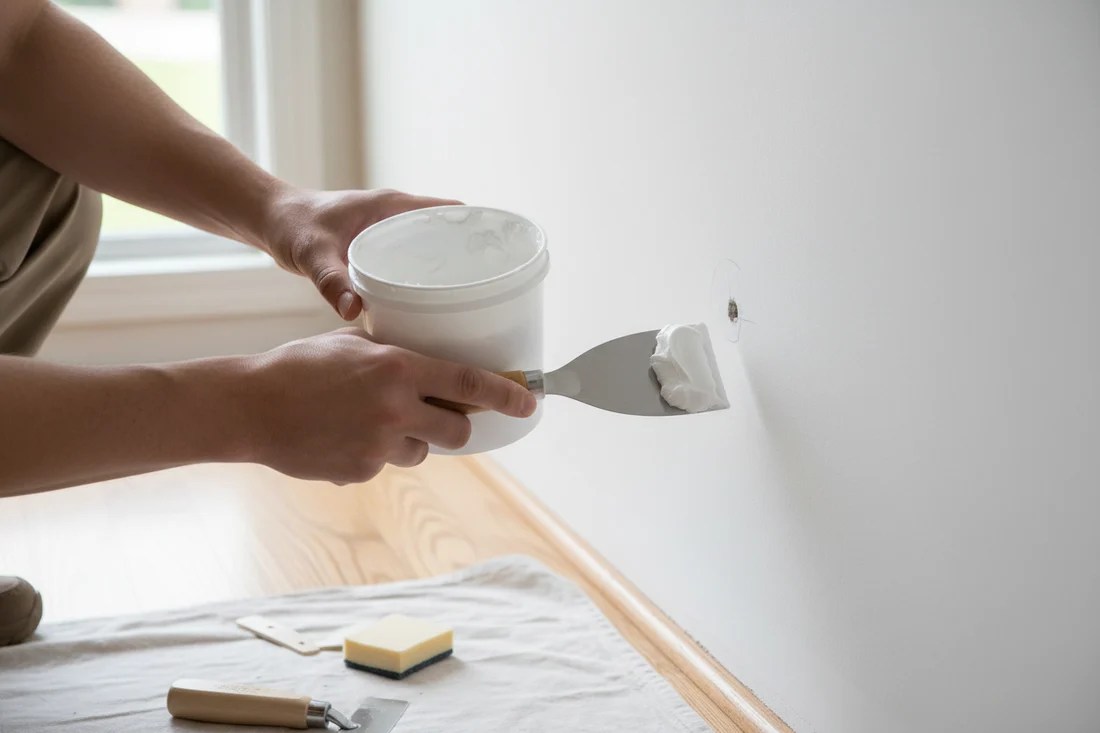
FYI: if there are any major cracks, water damage, mould or significant wall damage then you should report that to your landlord rather than attempt to fix it yourself!!
For more detailed instructions, see The Home Depot Canada’s guide to repairing small drywall holes.
A Simple Step-by-Step Guide to Painting Your Walls
Once the surface has been prepared you can start painting if your landlord has given the go ahead to the project.
Step 1: Choose your paint. Pick an appropriate interior wall paint and check the colour. Test out a colour sample first.
Step 2: Protect the area. Protect the floor and the furniture and use painter’s tape along the edges.
Step 3: Primer if required. Some repaired, unfinished or heavily stained surfaces will need a coat of primer.

Step 4: Paint the edges first. A smaller brush is required for the corners, ceilings and baseboards.
Step 5: Use a roller for larger areas. Apply an even coat with even, steady rolls… Let it dry.
Step 6: Clean up. Clean the brushes and rollers. Carefully remove the painter’s tape and allow the paint to dry fully.
For more painting advice, have a look at Benjamin Moore’s Beginner friendly guide to painting a room.
Most Common Painting Mistakes and How to Avoid Them
Even a simple painting job can go wrong if you don’t take the time to do it properly. Here are some common painting mistakes beginners should avoid:
– Skip the preparation and just clean and repair the wall first.
– Using too much paint: you’re going to get drips and unevenness.
– Don’t ignore the drying times. If you apply another coat too soon it’ll affect the result.
– Don’t get the colour wrong: the light in a room will affect how a colour looks. Test it out first
– Forgetting about getting the landlord’s permission as that would cause issues!!
Avoid those mistakes and your first job into painting will be much easier and you’ll be able to make better use of your budget.
Get started on your first home project with BrightNest!
You don’t need to go out and spend a small fortune to improve your apartment or even hire anyone. With a bit of preparation, some well priced materials and some great beginner level guidance you can learn the skills you need to do a whole host of things yourself.
BrightNest Home & Hardware provides useful products and useful guidance to make home improvement a little less daunting for first time renters.
Read the full DIY guide on the BrightNest blog and start your first-home project today!